Building a Collaborative Digital Platform for 10,000+ Tax Professionals Across 44 Countries
IOTA, the Intra-European Organisation of Tax Administrations, needed to replace an outdated digital platform that could no longer support collaboration among its 10,000+ members from 44 European tax administrations. The existing system suffered from poor performance, fragmented processes, and limited functionality for document collaboration, event management, and knowledge sharing.
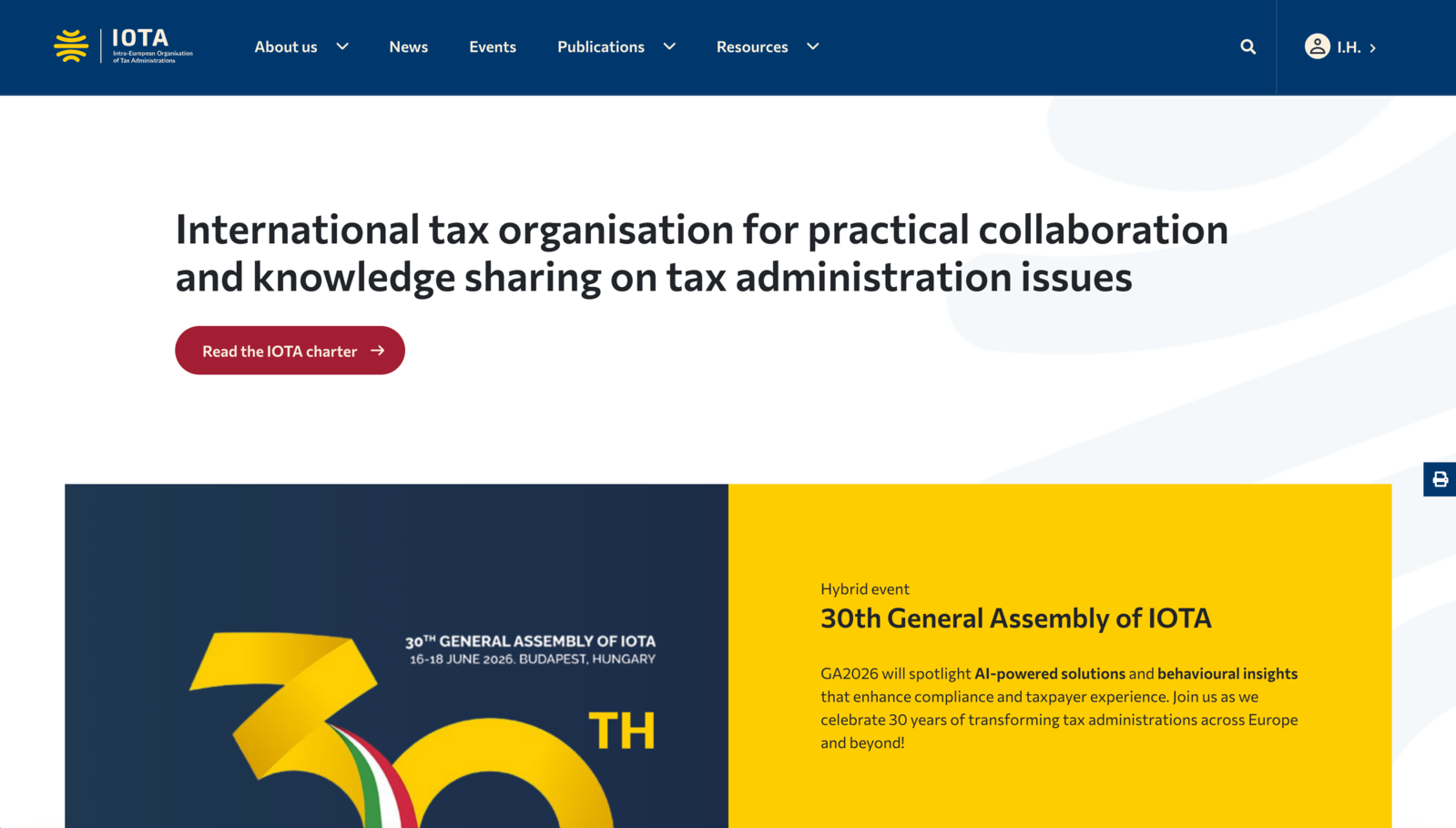
Netgen delivered a complete platform overhaul: a redesigned public website and a dedicated back-office with 11 interconnected custom modules. The solution consolidated previously manual workflows into structured, automated processes while providing members with real-time collaboration tools, advanced search capabilities, and role-based access to resources. The platform now serves as the central hub for IOTA's knowledge-sharing mission across European tax authorities.
Kunde
The Intra-European Organisation of Tax Administrations (IOTA) is a non-profit intergovernmental organisation established in 1996. It provides a platform for 44 member tax administrations across Europe to exchange experiences and best practices on tax administration. IOTA serves over 10,000 tax professionals through workshops, forums, and published materials aimed at improving tax collection efficiency, taxpayer compliance, and professional services.
Zeitrahmen
2023 - ongoing
Links
https://www.iota-tax.org/
Our role
Netgen served as the sole delivery partner responsible for the full project lifecycle. Our scope included:
- UX concept development and information architecture
- Visual design for public website and back-office interfaces
- Technical development of 11 interconnected modules on Ibexa CMS
- Data migration from the legacy platform
- Integration with Microsoft Office for the Web
- User training and documentation for administrators and members
We owned both strategy and execution, from initial analysis through deployment and ongoing development.
Challenge
IOTA faced several interconnected problems with their legacy platform:
Performance and usability limitations. The old website was slow, poorly responsive on mobile devices, and difficult to navigate. Members struggled to locate relevant tax-related content among years of accumulated materials.
No separation between public and member processes. Administrative workflows, member interactions, and public content were mixed within the same interface. This created confusion and made it difficult for users to complete tasks efficiently.
Unmanageable access control. The previous system granted administrators excessive flexibility in defining roles and permissions. Over time, this led to inconsistent access policies and high administrative overhead for routine permission management.
No real-time collaboration tools. Members had no way to communicate informally or collaborate on documents within the platform. Discussions happened via email, creating friction and delays.
Unstable survey system. The existing survey functionality was unreliable and occasionally caused website crashes when handling complex forms. This limited IOTA's ability to collect structured feedback and data from member countries.
Manual event management. With numerous live, hybrid, and online events each year, IOTA administrators spent significant time on manual processes for registrations, invitations, evaluations, and participant tracking.
Buried knowledge assets. Valuable reports, documents, and insights from member countries were difficult to discover. The search function could not index PDF content, leaving critical information effectively hidden.
Solution
We addressed these challenges through a modular architecture that separates concerns while maintaining tight integration where needed.
Public website rebuild. We restructured the information architecture based on a content audit, implemented a responsive design with mobile-first development, and optimised performance through code and media improvements. The new CMS streamlines content management for IOTA staff.
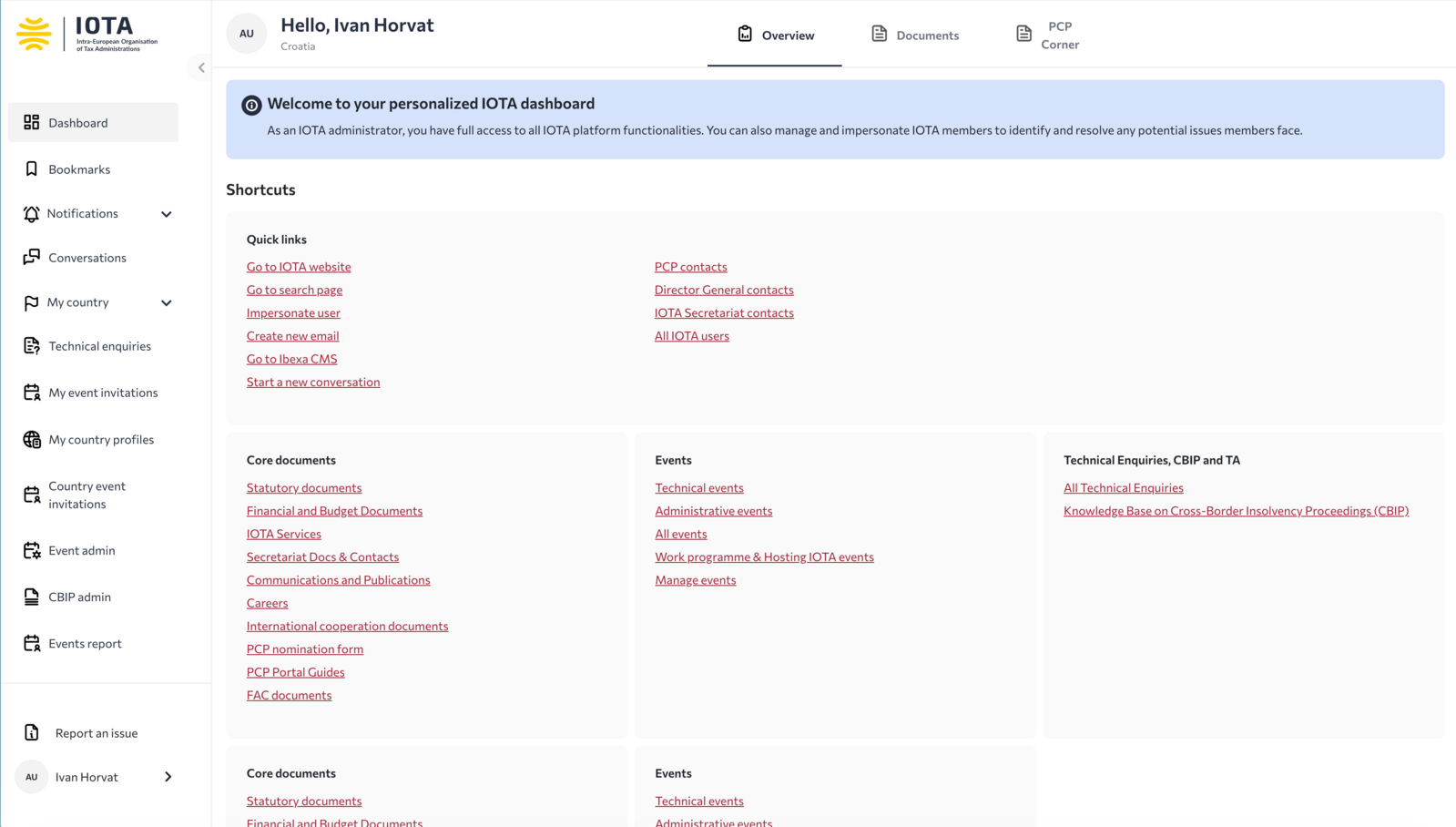
Dedicated back-office. Registered members now access a separate environment with personalised dashboards based on their role. Administrative processes follow structured workflows, and outcomes automatically publish to the public website as structured content.
Standardised access management. We replaced the overly flexible permission system with predefined user roles integrated into Ibexa CMS. Users receive appropriate access automatically upon registration based on their credentials and user type. Administrators can still make adjustments through a streamlined interface.
Communication and collaboration module. Members can now communicate via 1:1 and group chat. Chat groups can be created manually or generated automatically (for example, all participants of a specific event). Document collaboration is integrated with Microsoft Office for the Web, allowing real-time editing of Word, Excel, and PowerPoint files within the platform.
Event management module. A structured template system enables administrators to create consistent event pages with all required elements: agenda, sessions, speakers, registration, participant lists, surveys, and document repositories. The module includes participant tracking dashboards, automated survey integration for registrations and evaluations, and a host country application system with cost-sharing calculations.
Mailing module. Administrators can send targeted emails to predefined user groups (event participants, invited non-registrants, etc.) with dynamic personalisation. The system supports scheduled delivery and can automatically populate attachments such as certificates with recipient-specific data.
Survey and forms module. We built a custom form builder with drag-and-drop functionality supporting multiple field types: rich text, single and multiple choice, dropdowns, date pickers, ratings, file attachments, and section groupings. The system supports conditional logic for dynamic forms and can assign surveys to individuals or collaborative groups. This module integrates across the platform for event registrations, evaluations, and data collection processes.
Advanced search module. The new search indexes all content including PDF documents, supports filtering by tags, categories, and publication date, and provides real-time suggestions. Results respect user permissions, showing only content the user is authorised to access. Historical content was carefully indexed during migration to ensure discoverability.
IOTA-specific process modules. Three specialised modules support IOTA's core knowledge-sharing functions:
- Technical Assistance Module: tracks projects from initial idea through implementation with milestone tracking and reporting
- Technical Enquiries Module: collects and structures tax-related questions and answers into a searchable knowledge base
- CBIP Module: gathers and organises cross-border insolvency proceedings information from member countries
All three modules integrate with the survey builder for standardised data collection.
Results
- Platform serves 10,000+ registered members from 44 countries
- 11 interconnected modules delivered
- Full content migration from legacy platform completed
- PDF content now searchable across the knowledge base
- Automated workflows replaced manual processes for events, surveys, and communications
- Real-time document collaboration enabled through Microsoft Office integration
Ihr Projekt mit uns ist nur einen Klick entfernt.
Sie haben ein Projektziel und möchten mit der Umsetzung beginnen?